There’s a particular kind of tired that comes from living in a villa where the paint has just faded into the background. Not damaged, not peeling, just dull. Walls that once felt fresh now feel like they’re waiting for something. Most homeowners don’t notice it happening gradually — they notice it all at once, usually when guests are coming over or a new season starts and the house suddenly feels like it needs a reset.
That reset is almost always interior villa painting. And while it sounds like a single job, it’s really a series of smaller, distinct jobs — each room asking for something slightly different in terms of prep, finish, and color logic. This guide walks through what that actually looks like room by room, plus the practical questions — cost, timing, prep — that come up in almost every conversation we have with villa owners across Dubai.
Living Room Painting: Where First Impressions Live
The living room usually sets the tone for the whole house, which is why it’s the room people agonize over most. It’s also the room with the most going on structurally — high ceilings in many Dubai villas, large windows, archways, and open sightlines into dining or hallway areas that all need to work together rather than compete.
A good approach here starts with light. Villas with big windows facing east or west get very different quality light throughout the day, and a color that looks warm and inviting at 4pm can look flat and grey by evening under artificial lighting. Professional painters usually test a color across a full day before committing, precisely because paint swatches under shop lighting rarely match how a shade behaves at home.
Neutral, layered tones — soft greys, warm whites, muted greiges — remain popular in living rooms because they let furniture and decor do more of the visual work. But we’re also seeing more Interior Villa Painting owners lean into deeper tones on a single wall to add character, which brings us to feature walls a bit further down.
Bedroom Painting: Designing for Calm
Interior Villa Painting, Bedrooms have a different job to do than living rooms. Nobody’s trying to impress anyone in a bedroom — the goal is comfort, and the color choice should support that rather than fight it.
This is where softer, muted colors tend to outperform bold ones. Dusty blues, soft sage greens, warm taupes, and gentle off-whites are common requests because they read as calm rather than stimulating, especially under low evening light. Kids’ rooms are the exception — they tend to invite more color experimentation, though even there, a soft base with color introduced through decor rather than four saturated walls tends to age better as the child grows.
Ceiling color matters more in bedrooms than people expect. A stark white ceiling against a soft wall color can feel clinical; a very slightly warmer white or a tone-matched ceiling often makes the whole room feel more enclosed and restful.
Kitchen and Dining Areas: Function First, Then Style
Kitchens and dining areas take more punishment than almost any other interior space — steam, grease, splashes, constant cleaning. This is where the Interior Villa Painting finish decision actually matters as much as the color itself, something we’ll get into shortly.
Open-plan villas, which are common across newer Dubai developments, often connect the kitchen visually to the dining and living space. In these layouts, consistency matters more than variety — a kitchen that’s dramatically different in tone from the adjoining dining area can make an open floor plan feel disjointed rather than connected. Many homeowners choose a shared neutral base across the open zone, then introduce personality through cabinetry, backsplash, or a single accent wall in the dining nook.
Interior Wall Colors: Making the Whole-House Decision
Choosing color room by room is one thing. Choosing color for the whole villa so it flows logically from space to space is a different challenge entirely, and it’s one of the most common things people get wrong when they try to DIY a full repaint.
The general principle professional painters work from is to build a palette, not a list of favorites. That usually means one or two neutral base tones that repeat through connected spaces — hallways, living areas, staircases — with slightly bolder choices reserved for bedrooms, powder rooms, or one true feature wall. This creates a home that feels considered rather than a collection of disconnected rooms that happen to share a front door.
Ceiling Painting: The Detail Everyone Forgets
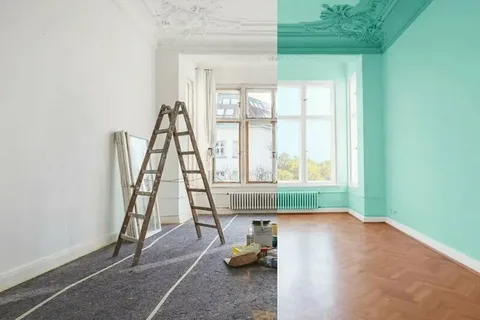
Interior Villa Painting, Ceilings rarely get the attention they deserve, but they affect a room more than most people realize. A ceiling that’s been painted the same flat white for a decade often looks yellowed or patchy next to freshly painted walls, and that contrast is more noticeable than a slightly imperfect wall finish.
Interior Villa Painting, Standard practice is a flat or matte white ceiling paint, chosen specifically because it doesn’t reflect light the way walls do — a glossy ceiling finish tends to highlight every imperfection in the plaster. In villas with high or vaulted ceilings, this becomes even more important, since imperfections are more visible from below at that height and angle.
Feature Walls: Adding Character Without Overcommitting
Feature walls have become a genuine trend across Dubai villas, and for good reason — they let homeowners introduce a bold color, a textured finish, or even a patterned wallpaper-style paint technique without repainting an entire room in it. A deep emerald or navy wall behind a bed, a warm terracotta tone in a dining nook, or a textured limewash finish in an entryway can transform a space while keeping the rest of the room neutral and flexible.
The trick with feature walls is restraint elsewhere. A feature wall works because it stands out against a calmer backdrop — if every room has one, the effect cancels itself out.
Paint Finishes: The Decision Nobody Explains Properly
This is one of the most under-explained parts of Interior Villa Painting, and it genuinely changes how a room looks and performs over time.
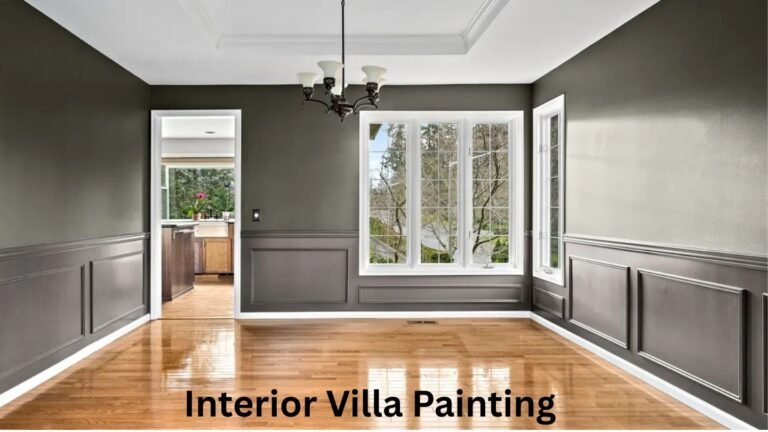
Matte and flat finishes hide imperfections well and give a soft, elegant look — ideal for living rooms and bedrooms, but harder to wipe clean. Eggshell and satin finishes offer a light sheen with better washability, making them a strong middle ground for hallways, family rooms, and kids’ spaces. Semi-gloss and gloss finishes are the most durable and easiest to clean, which is why they’re typically reserved for kitchens, bathrooms, and trim work rather than full walls.
Choosing the wrong finish for the wrong room is a common regret — a flat finish in a busy kitchen will show marks fast, while a glossy finish in a living room can highlight every wall imperfection under direct light.
Interior Paint Cost: What Actually Drives the Number
Cost is understandably one of the first questions villa owners ask, and it depends on more than square footage alone. Villa size and ceiling height are the starting point, but wall condition matters just as much — a villa with cracks, old peeling paint, or heavy staining requires more prep work than one that’s simply due for a color refresh. The number of colors and feature walls also affects cost, since more colors mean more careful cutting-in and coat management.
Interior Villa Painting quality plays a role too — premium washable paints cost more upfront but tend to hold their finish and color far longer, which usually works out cheaper over a five-to-ten-year horizon than repainting more frequently with a budget product.
The only reliable way to get an accurate number is a proper in-home assessment rather than a rough estimate based on villa size alone.
How Long Interior Villa Painting Takes
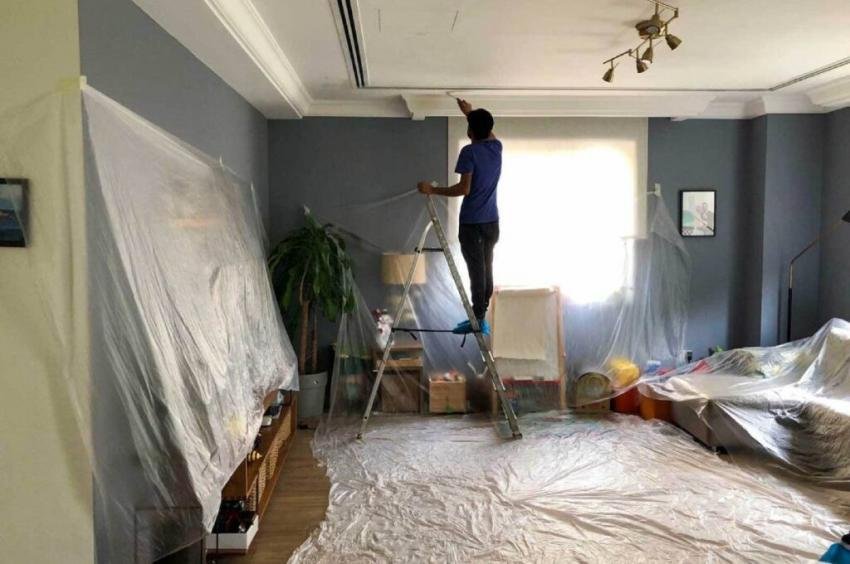
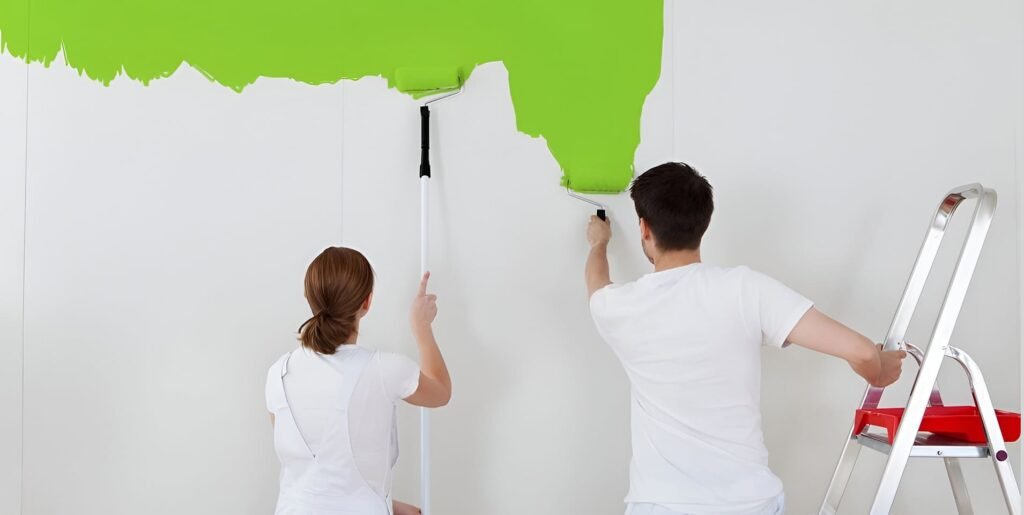
For a mid-sized villa (roughly three to five bedrooms), a full interior repaint typically takes anywhere from four to seven working days with a proper crew, depending on wall condition, the number of colors involved, and how much furniture needs to be moved or protected along the way.
Single rooms — a bedroom or a living room — can often be completed in a day or two. Villas with extensive feature walls, textured finishes, or significant wall repair work naturally take longer, since prep and drying time between coats can’t be rushed without affecting the final result.
Interior Villa Painting in Downtown Dubai: A Few Local Notes
Interior Villa Painting come with their own particular mix of considerations. Many are part of gated communities or managed developments with specific rules around contractor access, working hours, and material storage during a project — worth confirming before work begins.
The area also sees a lot of natural light bouncing off surrounding high-rises and open spaces, which, similar to the JLT towers we’ve worked in, tends to make color choices look more intense indoors than they appeared on a swatch. Villas here also often feature larger open-plan living and dining spaces, which makes the whole-house color palette approach especially important — a disjointed color scheme is far more noticeable in an open floor plan than in a home with more segmented rooms.
FAQs about Interior Villa Painting
How many coats of paint does a villa interior actually need? Two coats is standard for a clean, even finish, especially over an existing color. A single coat rarely hides old paint fully and tends to look patchy once it dries.
Do I need to move all my furniture out during painting? Not entirely — furniture is typically moved to the center of the room and covered rather than removed from the house, though clearing smaller items and decor makes the process faster and safer for everyone involved.
Can I paint over wallpaper? It’s possible in some cases, but wallpaper seams and texture often show through, and older wallpaper adhesive can affect how well paint adheres. Removing it first almost always gives a better long-term result.
How long before I can use a room after painting? Walls are generally dry to the touch within a few hours, but it’s best to avoid hanging anything or pushing furniture back against the wall for at least 24 to 48 hours to let the paint fully cure.
Should ceilings and walls be painted the same color? Not usually. Most villas use a dedicated ceiling white to keep rooms feeling bright and spacious, though tone-matched ceilings are becoming more popular in bedrooms for a cozier, enclosed feel.
Bringing It All Together
Interior villa painting isn’t really one decision — it’s a dozen smaller ones, room by room, finish by finish, that add up to how the whole house feels day to day. Getting it right means thinking about light, function, and flow together rather than picking colors in isolation.
At CleanFinishers, this room-by-room thinking is exactly how we approach every villa project across Dubai, including the specific light and layout considerations that come with Interior Villa Painting in Downtown Dubai. If your villa is due for a refresh, a proper walkthrough and color consultation is the best place to start — it tends to save homeowners from repainting twice.